Madrid is not traditionally thought of as a sushi capital. Yet tucked into the quiet Chamartín neighborhood is Zuara Sushi, a 13-seat counter that has quietly emerged as one of Europe’s most compelling Japanese dining experiences. With a €650 (approximately $700) omakase menu and a two-month waiting list, Zuara has become a destination for serious diners—not just from Spain, but across Europe and beyond.
Tokyo Precision, Madrid Ingredients
The restaurant is the creation of chef David Arauz, formerly of 99 Sushi Bar, who earned acclaim for his work blending Edomae-style technique with a distinctly European sensibility. At Zuara, that approach is distilled into a rigorous and seasonally evolving menu that adheres to the core principles of omakase: chef-led, highly curated, and unyieldingly focused on quality.
Despite the Tokyo-style counter and formal service, this is not a carbon copy of a Japanese sushi-ya. Arauz makes a point of sourcing much of his seafood from Spanish waters—red prawn from Palamós, wild-caught hake, Mediterranean mackerel—while also importing select cuts of tuna and uni from Japan. The rice, too, is notable: seasoned lightly with akazu (red vinegar) and served at body temperature, it forms a subtle but critical foundation for the nigiri.
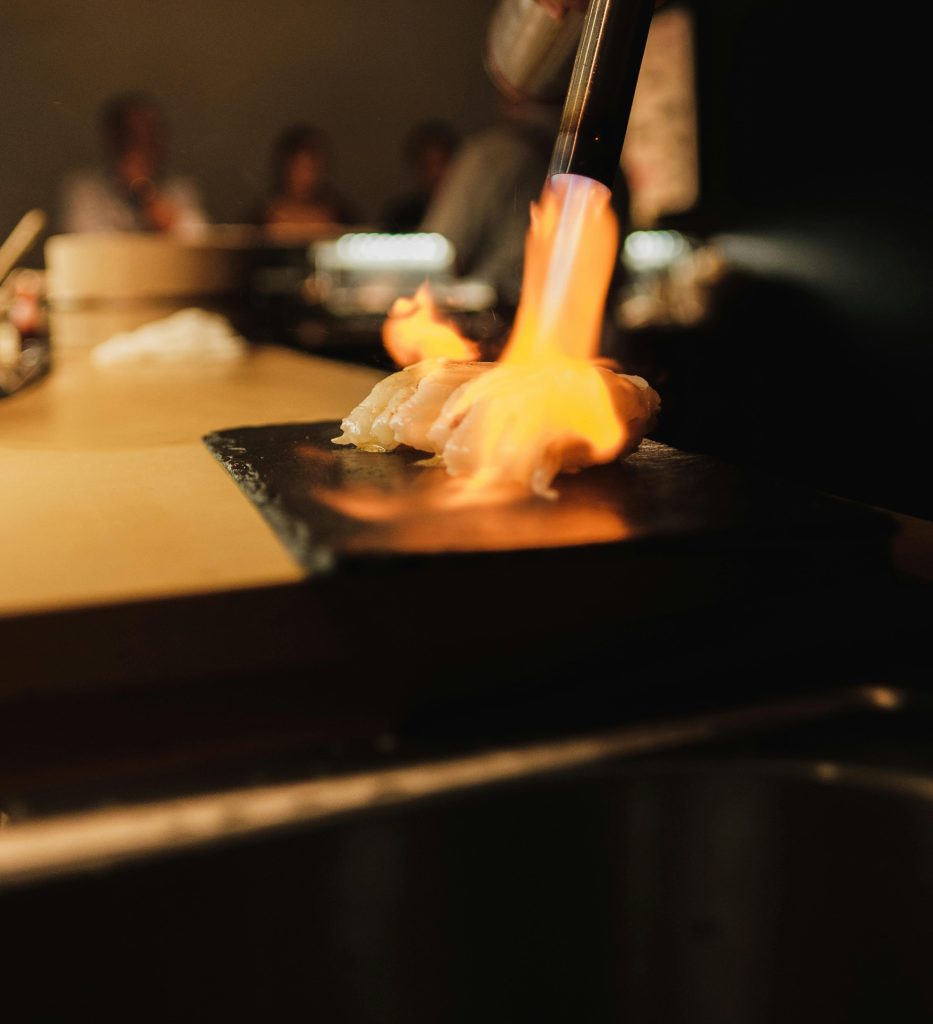
A typical progression moves from precise sashimi—delicately aged white fish, say, or buttery akami—into nigiri that spans both geographies and techniques. Highlights include lightly torched sardine brushed with nikiri, and a shari-tucked slice of ventresca with a whisper of grated wasabi root. The pacing is deliberate and restrained. Each piece is explained briefly, with no excessive storytelling or showmanship.
Not for the Instagram Crowd
Zuara is conspicuously devoid of spectacle. There is no dry ice, no choreographed knife work, no made-for-social-media plating. The room itself is spare, lined in pale wood with no bar seating beyond the counter. Service is attentive but minimal—servers speak in low tones, and there is little in the way of English-language menus or interpretation.
That austerity is not a bug but a feature. Zuara appears to be engineered for diners who want precision and calm, rather than novelty or entertainment. The wine and sake list is sharp and compact, with some thoughtful Spanish-Japanese pairings (a cask-aged Manzanilla with smoked eel, for example). Dessert, when offered, is minimal—perhaps a yuzu sorbet or a matcha cream—keeping the spotlight on the sushi.
Whether it’s worth the €650 price tag depends on the diner’s priorities. For purists, especially those who appreciate the adaptation of Edomae craft to European terroir, it is arguably one of the best expressions of sushi in Europe. For others, the absence of theatrics or a “name” chef may come off as overly austere.
What is clear, however, is that Zuara is not chasing trends. It is a restaurant operating on its own terms—and increasingly, that’s exactly what the world’s most discerning diners are looking for.