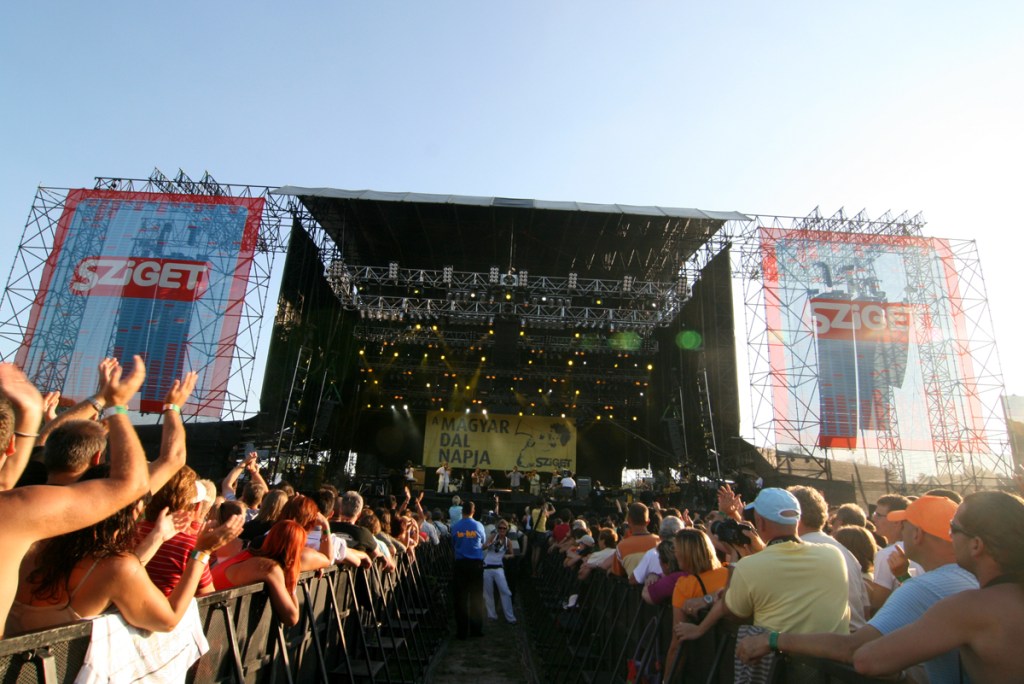
Sziget Festival, held each August on Óbuda Island in the heart of Budapest, is not just a music event—it’s a sprawling, week-long experiment in European cultural pluralism and collective expression.
Since its humble beginnings in 1993 as a post-communist student gathering, Sziget has grown into one of the continent’s largest and most influential festivals, drawing nearly half a million attendees from over 100 countries. Its evolution mirrors the continent’s own journey from division to unity, making Sziget a living reflection of Europe’s diversity, creativity, and aspirations.
Sziget’s defining trait is its radical inclusivity. Over six days, the festival transforms Óbuda Island into the “Island of Freedom,” a temporary city where music, art, and social ideals intermingle. The program is staggering in its breadth, with more than 1,000 performances across 50-plus stages.
The 2025 lineup is characteristically eclectic, with headliners including Post Malone, A$AP Rocky, Charli XCX, Chappell Roan, Anyma, and Shawn Mendes, alongside acts like Justice, FKA twigs, Little Simz, Blossoms, and Nelly Furtado. Sziget’s stages cater to every conceivable taste — pop, rock, indie, hip-hop, electronic, world music, jazz, and experimental — while the Colosseum and Telekom Electronic Beats Arena are temples for underground and progressive electronic sounds.
Yet Sziget is never just about the music. The festival is a multidisciplinary playground: circus acts, contemporary theater, cabaret, visual art installations, and even meditation tents and workshops on everything from identity politics to mental health. The ethos is one of boundless self-expression, where Szitizens (as attendees are affectionately called) are encouraged to explore, create, and connect.
Iconic
Sziget’s impact on Budapest and Hungary is profound. Economically, it generates millions in revenue, supports thousands of jobs, and boosts the city’s international profile. Socioculturally, it serves as a bridge between East and West, a legacy rooted in its post-Soviet origins and its founders’ vision of a “dream nation” built on freedom and creativity.
The festival’s audience is a true cross-section of Europe and beyond, with Hungarians and foreigners split nearly evenly—a rare feat in the festival world.
The list of artists who have graced Sziget’s stages is a roll call of modern music history: David Bowie, Prince, Muse, Foo Fighters, Ed Sheeran, Dua Lipa, Lana Del Rey, Kings of Leon, Arctic Monkeys, Florence + the Machine, and Stromae, among many others.
Sziget is also a magnet for celebrities and cultural figures — Lana Del Rey has mingled with fans, Dua Lipa has lost her voice from excitement, and comedian Sacha Baron Cohen has been spotted in the VIP area. The festival’s atmosphere encourages such mingling; artists and attendees alike often speak of the unique energy and sense of belonging that Sziget fosters.
There have been moments of logistical challenge — Ed Sheeran’s 2019 show drew a record crowd that tested the festival’s infrastructure — but the overwhelming narrative is one of resilience, adaptability, and joy. Sziget’s story is ultimately about the best of European culture: openness, diversity, and the belief that music and art can create a temporary utopia, even if only for six days each summer.